Thursday, August 8, 2013

LAKE NAKURU – An All-consuming Day for a Python

(This is the fourth in a series of posts about my just-completed Kenya safari.)

From Lake Naivasha, we headed out early for the next leg of our safari—with a dispassionate send-off from the resident troop of black-tie-attired colobus monkeys (the only primates, we're told, without thumbs).


It’s just an hour’s drive northwest to Kenya’s fourth largest city, Nakuru, and nearby Lake Nakuru National Park—one of the country's smallest and best game parks. Along the way, especially at higher elevations, we could clearly see the broad sweep of this stretch of the great, 3,700-mile-long Rift Valley, flanked here by the 10,000-foot Mau Escarpment on the west and the highlands and mountains of the Aberdare Range on the east.

   The number and range of animals we 
   were spotting continued to amaze us.

Lake Nakuru is a soda lake, one whose highly alkaline waters support a distinct range of organisms, among them, certain algae that just happen to be irresistible to flamingos. Depending on the season and a number of more immediate conditions, the lake’s shallows can be swathed in pink as anywhere from thousands to more than a million of the showy birds congregate, methodically straining the water.

Though we saw far fewer flamingos than we'd hoped for, what they lacked in numbers these flamboyant birds made up for in the splashes of color and elegance they threw against the backdrop of the lake's calm, gray-blue waters.


MANE ATTRACTION
With the top of our safari van raised, and Eric, our knowledgeable guide and driver, at the wheel, we cruised the park for the rest of the day. Both the number and range of animals we were spotting continued to amaze us.

It started with our first lion sighting, a big male walking through tall grass nearly a hundred yards away. It was uphill all the way from there: rhinos—both white and the critically endangered black; water buffalo; hundreds of zebras, two varieties of gazelle; impala; waterbuck; giraffes; velvet monkeys…and more lions.


Besides the flamingos, we saw white pelicans and spoonbills, hovering black-and-white kingfishers, a variety of gorgeous songbirds, imposing, five-foot-tall marabou storks, a couple of ostriches and the showy, snake-eating secretary bird.

Around mid-day, we wound our way up to the top of Baboon Cliff for a spectacular overview of the lake and parklands below. There we met some more amazing birds, some red-headed rock agama lizards and the engaging rock hyrax.


    The best place to spot a leopard is 
    draped over a lower, horizontal branch 
    of a tree.

PRESSING ENGAGEMENT
That afternoon, we’d stopped to admire one of those marabou storks standing by the water’s edge when we noticed something moving in the grass not ten feet away. A better look, through binoculars, revealed the sad truth; it looked like a dying flamingo.

At first, it appeared the poor bird lay on its side, writhing. But, on closer inspection, we could see that a rock python, and not a very big one at that—maybe seven or eight feet long—had caught the big bird unawares, squeezed the life out of it and started ingesting it head first.


With fascination slightly outweighing revulsion, we watched as the ambitious snake unhinged its jaws and began stretching its mouth around the feathery
pink carcass.


LEOPARDS WERE NOT SPOTTED!
As we slowly cruised the park, besides looking for animals grazing in the open, we were constantly scanning the trees on either side for as far as we could see. It seems the best place to spot a leopard, especially mid-afternoon, is draped over a lower, horizontal branch.

Now and then, Eric would stop, pull out his binoculars and check out some dark mass on an acacia limb two hundred yards away. And, though we never did spot a leopard, this technique paid off in other ways, including being able to sneak up on a young lion resting languidly in the crotch of a tree.


GOOD NIGHT, HIPPOS
When we got back to Lake Naivasha Resort that evening, the wildlife wonders continued. Sally and I were rounding a corner on our way to our second-floor cottage when we saw the giraffe leisurely trimming the hedge up there next to our door. We stopped and watched with renewed admiration for this majestic creature.

Just before going to bed, we decided to take one last look out our patio doors onto the dark lawn below. There, munching away on the grass just below our deck were no fewer than eight huge hippos! We watched a while, quietly closed the doors and drifted off to sleep, smiling.


Sunday, August 4, 2013

LAKE NAIVASHA – Up Close with Wild Game's Stately and Stout

From the Aberdare region we headed northwest a ways, just far enough to cross the equator and see stunning Thompson Falls. Then it was back south for a few hours, arriving at our lodging for the next two nights, the lovely Sopa Lake Naivasha Resort.

HEIGHTS OF GRACE
From the moment we passed through the gates, it was clear our lives here would be intertwined with those of the local wildlife. Zebras roamed freely here and there, crossing the roads and grounds at will. Giraffes—lots of giraffes—grazed off the tops of 20-foot acacia trees.

Herds of waterbuck, a stocky member of the antelope family, wound their way along paths and between buildings, all over the property. And hippos...well, we were to meet them too, closer than we could ever have imagined.


It was here at Naivasha that I began to realize that, of all the amazing animals we were seeing in Kenya, giraffes would come to stand out (pun intended) as the ones that most surprised and delighted me. Of course, I'd seen giraffes before—perhaps a dozen in my life, at zoos—but never moving and feeding like this, freely and naturally.

Everything about them speaks of peace, 
and I could listen all day.

I suppose it's their gentle power and the unhurried grace of their movement that touches me, especially considering their size (adult males reaching nearly a ton) and the apparent awkwardness of their shape. Everything about them speaks of peace, and I could listen all day.

(Our amiable safari-van mates, Maria and John, seemed to agree, coining a clever name for the place: Giraffic Park.)

WONDER ON THE WING

After check-in and lunch, we made our way down to the lake for a little cruise.

Lake Naivasha is the largest of the eight ecologically fragile lakes dotting Kenya's stretch of the Rift Valley. A freshwater body, Naivasha varies seasonally in depth, depending on rainfall amounts in the watershed. Right now, it's at a 20 year high, with thousands of acres of shoreline underwater, its graceful acacia trees stranded and slowly drowning.

High water or not, in terms of wildlife, Naivasha is known primarily for two things: birds and hippos. And, if you're a local, fish.

Winding our way in small motorboats along lush wetlands and through thin stands of wading trees, we could see that this is indeed prime habitat for birds—cormorant, ibis, egret, heron, stork…in fact, over 150 species of waterbirds alone.

Sacred ibis
Black and white kingfisher
Yellow-billed stork

A highlight of the cruise was our guide's stopping to coax a spectacular African fish eagle to swoop down from a distant treetop to snatch a piece of fish bait he'd thrown out on the water.

African fish eagle

PESKY KILLER HIPPOS
In utter counterpoint to the birds' easy flight lurked creatures we couldn't see—at least not right away—munching, right under our noses, on masses of abundant, bright green, succulent water plants. Our guide would stop the boat and ask us to watch a certain area, and eventually, a pair of round, pink ears would pop up. Then two huge, protruding eyes, followed by an enormous gray island of flesh. A quick breath, and down they'd go again.

They told us we'd have to have escorts 
to get from dinner back to our cottages.

Hippos were bobbing up and down everywhere! Apparently aware that more folks die of confrontations with hippos than with any other wild animal in Africa, our guide gave them a wide berth.


That night, we were to hear that many of these same hippos exit the lake after dark to graze on land…on grass, in fact—the very grass surrounding the guest cabins at our resort. They told us we'd have to have escorts to get from dinner back to our cottages.

We suspected this might be a bit of showboating for the tourists—until, that is, we indeed had to zig-zag all over the grounds in the dark to find our way 'round all the huge, round, looming silhouettes in our path. (We could easily hear their munching and grinding as we passed!)

 
Clearly, given a choice between evasion and employing our escorts' rather silly weapons (flashlights and puny sticks), the former was the sensible option. (Once again, we felt the need to coin a slogan for the situation: Beware those pesky killer-hippos!)

(Next day, we're off to explore another of the Rift Valley lakes, Lake Nakuru, but that's another story. Stay tuned…)

Wednesday, July 31, 2013

ABERDARE NATIONAL PARK – Life and Death at the Watering Hole

As if the surreal 23-hour, eight-time-zone flight to Kenya weren’t enough, our out-of-body state of mind seemed confirmed by the hubbub of black faces and the third-world vibe awaiting us at the Nairobi airport. Sally and I were both thinking the same thing: I hope this is going to prove worth the effort.

Our hotel gave us our first clue. The cosmopolitan Ole Serene Hotel, which served as the interim U.S. embassy after the 1998 terrorist bombing, is situated right next to the 45-square-mile Nairobi National Park. Its restaurant, bar and about half its rooms look out directly over the park’s broad plain of scattered scrub bush, reportedly home to nearly every species of wild game we’d come to see.

When, at some distance, we spotted our first giraffe, we were already thinking Wow, does it get any better than this?  It does.


After another day in the Nairobi area visiting the African Fund for Endangered Wildlife’s wonderful Giraffe Center, the Karen Blixen (Author of Out of Africa under the pen name Isak Dinesen) estate and a few other nearby attractions, we headed 150 km north in our nifty little Nissan safari minivans to the first of four national parks or wildlife reserves encompassed by our safari.

Aberdare National Park, established in 1950, comprises 475 square miles of varied landscapes, ranging from 7,000 to 14,000 feet in elevation. Its rolling, wooded hills and dales, trout streams and cool weather shattered yet more of assumptions we’d had about Kenya’s climate.


NO, BULL!
We stayed at the amazing Ark, a game lodge situated on the edge of a busy animal watering hole and salt lick. Suggestive of the place’s priorities, each room features a light-and-buzzer code system at the head of the beds to alert guests when any of five key animal species shows up—even if it’s in the middle of the night.


Our first glimpse of the watering hole—from the Ark’s broad second-floor deck—saw about a dozen water buffalo, several water buck and wart hogs, a few impala and a marabou stork, all leisurely partaking of the water, the minerals in the soil, or just the relative security of being in an open space where predators have no cover in which to lie in wait for them.

Suddenly, the largest of the bulls began posturing his foul mood with aggressive lunges at the others.

Then, as we watched all these “extras” doing their quiet thing, a few of their heads lifted and turned toward the heavy thicket surrounding the clearing. Slowly, magnificently, the stars of the show parted the foliage curtain and strode deliberately onto the stage.

The elephants—a family comprising seven adults and a baby—made their way down to the mud hole, where they toed the earth with massive feet, then deftly probed the loosened soil with their trunks.

Suddenly, the largest of the bulls, presumably the calf’s sire, took issue with something and began posturing his foul mood with aggressive lunges at the others—directed eventually toward the baby. Then, just like in all those Nature programs I’ve ever watched about the lives of elephants, the rest of the family circled around to protect the baby.
        

The brute realized he wasn’t going to win this one, and strode off to recharge his ego. A poignant reminder that the importance of family extends to all creatures.

EYES IN THE DARK
Even more dramatic was the episode we experienced that night. Along with a few other diehards, Sally and I had stayed up late to observe the nightlife at the floodlit watering hole. The elephants had gone, leaving just a dozen water buffalo and a few warthogs calmly milling around.

We noticed movement at the dim edge of the pool of light. A single hyena scuttled furtively around the perimeter, eyeing the other animals for a weakness, his snout raised to sniff, perhaps, for the easier meal of carrion. A scout, I guessed out loud, wondering what he’d have to say when reporting back to his pack.

A few awestruck human beings could muster no words—just silent glances and subtle, knowing wags of the head.

No more than a minute after the scout turned back into the bush, a chorus of hyenas’ excited, bone-chilling laughter erupted from the pack. From just the rising fervor of their shrieks and the faint glow of their eyes as they darted between clumps of undergrowth, it was obvious they were converging on something.


Then all the glowing eyes were together, and, as the insane cackling rose to a crescendo, so did another sound, the terrible bleating of some poor little gazelle or dik-dik.

Mercifully, the frenzy soon quieted down, and the chill night air was still again. And a few awestruck human beings could muster no words—just silent glances and subtle, knowing wags of the head—at this stark reminder of reality in this unsentimental domain of predator and prey.

(Just as we were about to turn and go back indoors for the night, another movement down in the light caught our eye. Again, a single hyena was sneaking out of the bush, right where we’d seen and heard all the drama. He slunk across the mud flat, passing just below us, in his mouth the still warm leg of the animal he and his pack had just killed.)

                                    //–       –//–       –//

On a lighter note, here are some of the other beautiful—albeit less dramatic—things we saw in and around the watering hole at Aberdare.


Friday, July 26, 2013

RELEVANT ELEPHANTS – A Serendipitous End to a Kenyan Safari

(This is the first in a series of posts about my just-completed trip.)

A few days before my wife, Sally, and I took off for Kenya, I walked into Barnes & Noble for a book to take along. I wasn't looking for anything necessarily pertinent to Kenya, nor even to Africa.

Naturally, I headed the Nature section. (The first thing that caught my eye was the three copies of my own book, Under the Wild Ginger – A Simple Guide to the Wisdom of Wonder—which I slid out just couple of inches so the next browser couldn't miss them.)

The story turned out to parallel many of 
the places and species we were seeing. 

All I wanted was a nice adventure story, something involving real people, Nature, survival against the odds (or at least redemption) and, of course, wonder. Scanning the twenty or so shelves of titles, I narrowed it down to three possibilities and then settled on a book about a woman whose parents settled in Africa in the 30s and who grew up and spent the rest of her life in intimate contact with animals.

Barely noticing the title or author's name, I dove right in. To my surprise and delight, the woman's story just happened to be set in Kenya, and, as we made our way around the southeastern quadrant of the country, turned out to parallel many of the places and species we were seeing.

OF PENS AND PENS
Flash forward to the last day of our incredible 13-day safari. We'd returned to Nairobi, where we had the afternoon off before heading to the airport for the first leg of our 21-hour flight home. Maria and John, the very nice young couple from New York City we'd been traveling with asked us to join them on a visit to a center for orphaned baby elephants and rhinos just outside of the city.

The Orphans Project of the David Sheldrick Wildlife Trust was an absolutely enchanting place. Our visit was timed to coincide with the daily round-up from the grounds and retirement to their pens of all 20 or so baby elephants currently in residence. In ones, twos and threes, they all came trotting dutifully around the bend and paraded right past us on their way "home" for the night.


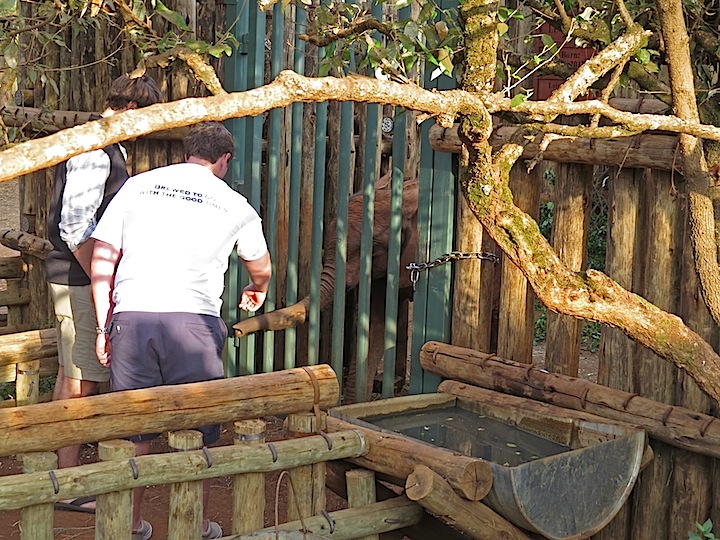
Once they were in their pens we were able to meet them up close, petting them, talking to them and, if we were lucky, getting to shake a soft, yet bristly, little trunk or two.


Sally "adopted" Narok, one of the babies named for a town we'd driven through the week before.

Sally "adopted" Narok, one of the babies named for a town we'd driven through the week before. And, while signing the paperwork, she happened to notice a book for sale in the shop, a book written by the Trust's founder, Dr. Dame Daphne Sheldrick—a signed copy, no less. Feeling sure I'd like it, she bought it for me.

When Sally handed the book to me it dawned on her; "Isn't this the same book you're reading?" she said. I looked at the cover, and, though the design was quite different, the title, Love, Life and Elephants – An African Love Story, looked eerily familiar. And guess what. I now have two copies of an amazing, wonderful book, one with which I now feel a powerful personal connection.

MORE TO COME
This little story exemplifies the wonderful, often truly magical, character of our experiences in Kenya. I invite you to stay tuned here, and on my travel blog, El Viajero Contento, for a serial account of the unforgettable people, places and natural wonders we encountered.


Sunday, October 7, 2012

A WALK IN THE WOODS – Wisconsin Wonders

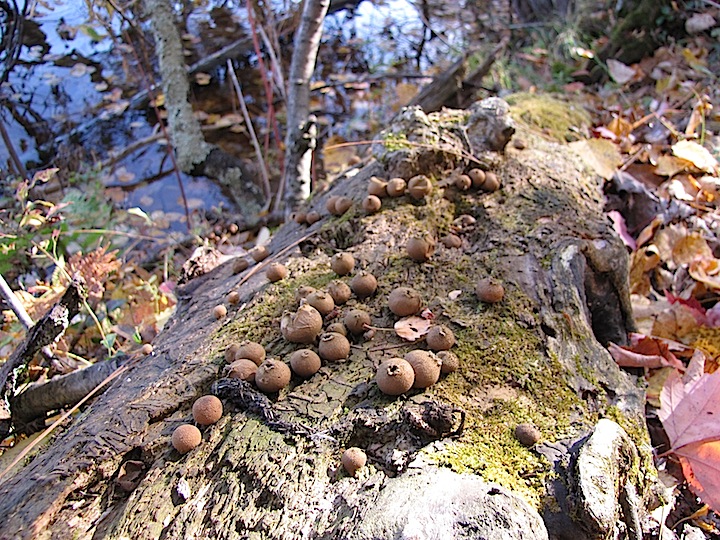
A few shots illustrating this weekend's much-needed respite from two years of quite faithful ten-per-month blog posting and the recent, unaccustomed concerns of book promotion to what truly inspires and restores me — time spent with good old friends, the celebration of Nature's small wonders and the simple joy of being.


Sunday, February 12, 2012

HUBBS CLASS: Hello and Happy Valentine's Day!

Hello, students! How are you all this Tuesday evening? Will you all be my valentines? Are you doing anything special to celebrate this special day of love and friendship?

I'm writing from here in the beautiful town of Zihuatanejo. It's located in the Mexican state of Guerrero, on the country's west coast. We're right on the Pacific Ocean. The villa we rent is about two blocks from the beach, perched high on a hillside overlooking the bay.

Here's the view from where I'm sitting in a photo taken during the day.

The view from our villa overlooking Zihuatanejo Bay.

As I write tonight from my open-sided living room, the sound of the waves crashing on the beach sounds like it's right next to me. Cool breezes flow in, cooling the room and me after another hot, sunny day. Now and then a butterfly or a couple of bats will fly in, right over my head. The bats want to perch in the corner of the kitchen ceiling, but they see me and that it's too bright, so they leave. I worry about the butterflies, because several small lizards (geckos) always run toward them looking very hungry. So far, the butterflies have always escaped.

Tonight, my wife and I went to a friend's house for a drink, and then walked across town to have dinner together. My wife had a huge baked potato with butter and sour cream. Our friend and I had tacos, made with soft flour and corn tortillas wrapped around different kinds of meat and cheese. There are several kinds of sauces to put on the tacos too. Some of them are very spicy hot, so I only use a little bit.

Walking back, we saw people putting up many little tables and stands along the streets where they will sell all sorts of Valentines (Día del Valentín) things, like candy, greeting cards and decorations -- much of it colored red or pink and in the shape of hearts. Has anyone given you a Valentines Day card or gift?

This afternoon we walked across town about two-and-a-half miles to a big grocery store where we stocked up on groceries for the week. Then we walked home, carrying the heavy cloth bags full of food, milk, juices and other things. They were really heavy and we were glad to get home.

In just one more week, my daughter, her husband and my two grandchildren will be flying down here from Boston for a week. We're very excited about their visit, and hope very much that they'll like it here as much as we do.

QUESTIONS?
If you have any questions you'd like to ask me about this place, about how it feels for me trying to speak a second language in a new country, or about anything else, please leave a comment and I'll try to answer in time for your next class.

I have to end this because it's late and I'm pretty tired. I hope you're all having a good class, learning a lot, and LISTENING to your teacher!  ;-)   I'll see you all again in a few weeks.

Your volunteer teacher, Jeff
P.S. Here are a few more photos:

Sailfish on their way to the public fish market.

Me talking with some young students about fishing.

One of the geckos on the wall of our room.

A seed pod and flower of the African tulip tree.

One of the many street musicians in Zihuatanejo.

A man casting his net for bait fish.

A roseate spoonbill

One of many kinds of fish for sale at the fishing pier every morning.

The end of another perfect day!